Research
Three lenses, one problem
Challenges associated with urbanization, sustainability, and technology all converged on a single conundrum: progress is driving a wedge between humans and their heritage.
Urbanization & migration
Correia & Mammola, 2023
Cities sit at the front line of society's complex problems as human relationships with the world and within society evolve.
For a compounding set of reasons, rising urbanization is disconnecting people from nature.
Biophobia – fear of ordinary organisms like spiders, snakes, mice – is on the rise.
17 of 25 tracked biophobias show increasing prevalence based on web search analytics.
Sustainability & behaviour
Thaler & Sunstein, 2008
Behavioural "nudges" use psychology to shift individual and public choices and understand human tendencies.
Common in sustainability campaigns and marketing alike, with the goal of achieving specific outcomes and reactions.
The key concern: this approach is often paternalistic and biased.
Giving people information and letting them choose can help mitigate some of the inherent dangers.
Technology & data
Hallnäs & Redström, 2001
Algorithms, digital twins, and AI can inform better decisions for policy makers, businesses, and the average citizen.
Despite all its benefits and strengths, technology is a double-edged sword.
People are overwhelmed by screens and information in all aspects of their lives.
There is a growing movement to find ways to tune it all out or at least change its form.
Problem statement
How might we make nature accessible to people living in cities and facilitate their yearning to reconnect with other living things in a compassionate and meaningful way?
Where the lenses overlap
Using two themes as lenses on the biophobia problem surfaced two concept directions.
Direction one
Visualization of complex problems
Direction two
Accessible, non-judgmental products
Both directions point to the same field: calm technology, and its best-known form, ambient information systems. See Philosophy → for that theory in depth. Following primary research, the most actionable gap that emerged was connecting people to their houseplants, as a first step in addressing biophobia.
Design hierarchy
Criteria that helped to guide conceptualization, ordered from foundational to aspirational.
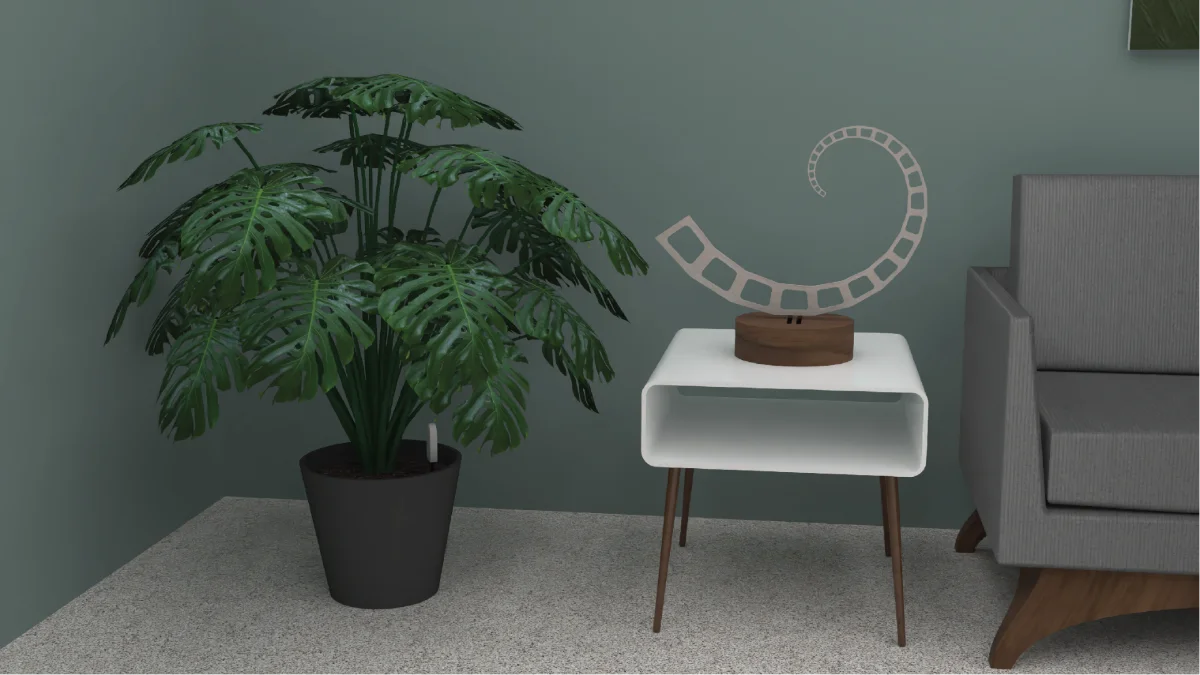
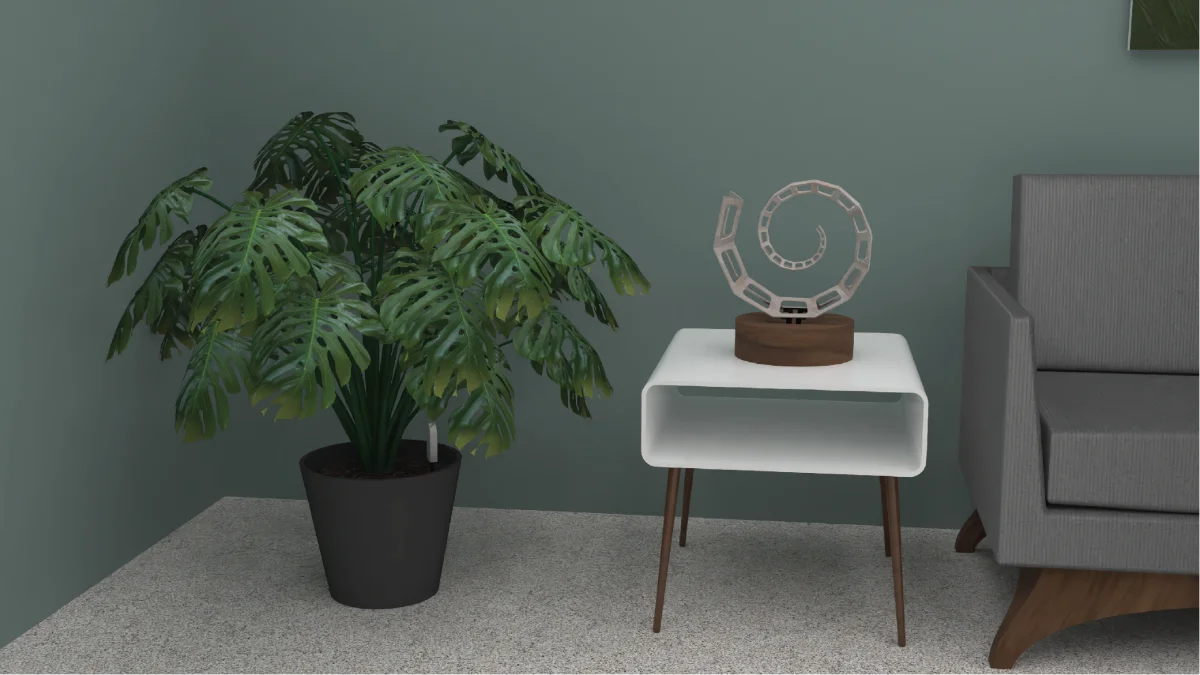
How BioFilix matches the hierarchy
The design decisions that traded off function with aesthetics and led to the form for BioFilix.
{{ item.body }}

Brian Patterson 2025-2026